ALTE #17
CROSSING
Jessica de Koninck
THE CROSSING
The welders wove a web of lace
across the river. Cars like gleaming beads
thread their way from shore to shore.
I stroll midway between clouds and water,
beaming as if I got a raise, as if
I were in love. Just this sunny day.
Time delights me. A walk
across the bridge
and back again.
Lawrence Bush
CROSSING GUARDS
In the sixth grade, my best friend Robert Cantor and I were appointed by our teacher, Mrs. Gilbert, to be crossing guards. This meant leaving class about twenty minutes before dismissal, putting on our white plastic crossing guard bandoliers, walking about three blocks from school, and waiting for kids to arrive at the corner where we stood.
We would then go stand in the middle of 110th Street and hold up our hands and stop cars from proceeding, essentially by daring them to knock us down. Then we’d tell the kids to cross.
I don’t believe we were supposed to do the job that way, but no one had really been clear about the do’s and don’ts of being a crossing guard.
The job was fun but also embarrassing: embarrassing to be singled out by Mrs. Gilbert, embarrassing to have the privilege of leaving class, embarrassing because the white sashes looked idiotic, embarrassing to tell kids when they could or couldn’t cross. I was happy to feel special, and greatly relieved when, after a month or so, Mrs. Gilbert asked us to turn in our bandoliers.
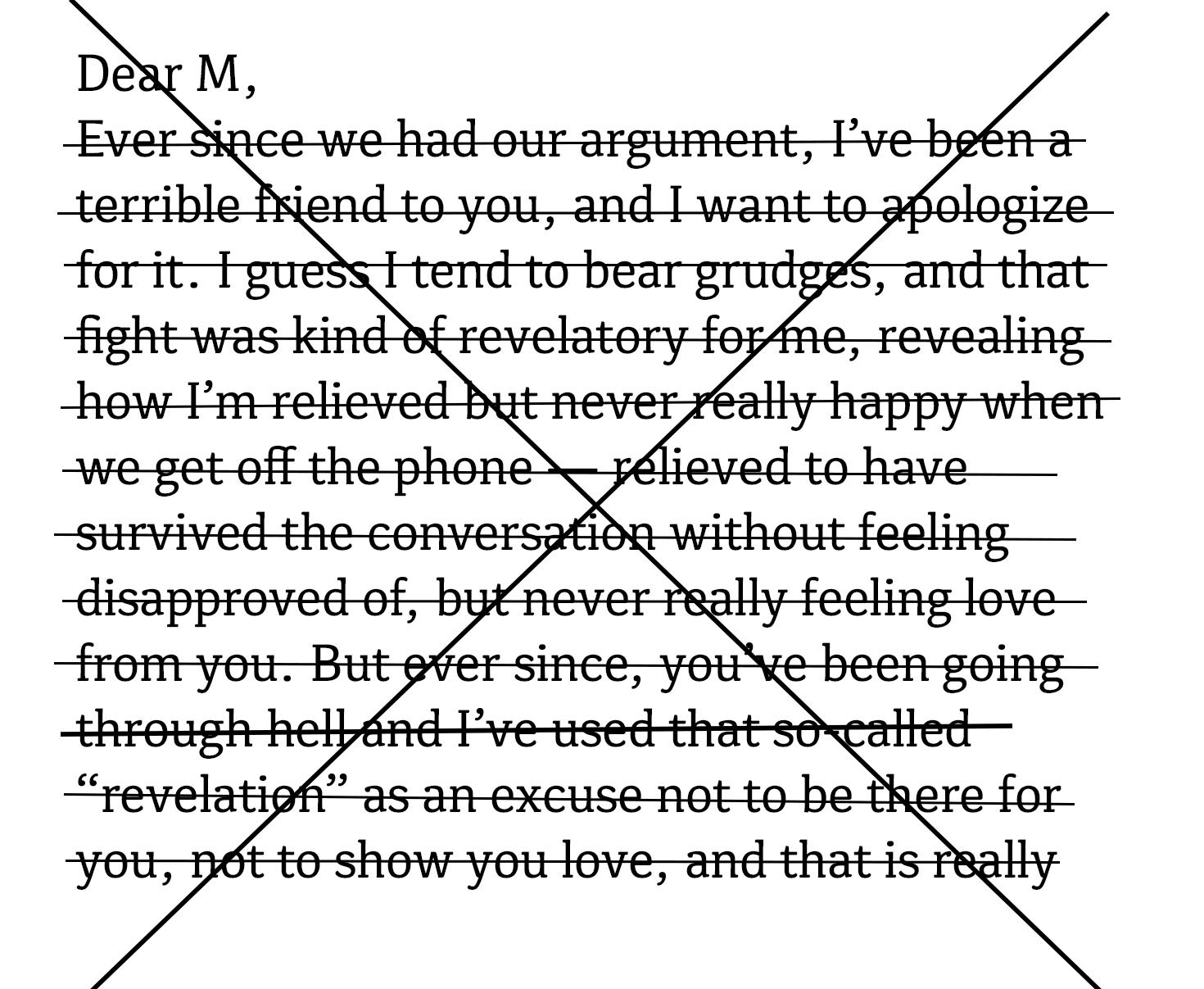
Bea Elderbee, “Cross My Heart” and “Cross-Outs”
Meyer Rothberg
89+
At 89+, I attend closely to the news of men who are much older than me: Dick Van Dyck, Mel Brooks, my friend's father, living independently at 104 in South Africa. Inspirations.
And, then, I think of my old Bronx friends, now gone like Red at 90, the Best Man at our wedding as I was at his, and the very few still with me. And more recent friends and acquaintances; some gone, some with us. Some widowed; some healthier than their partners, some less so.
I recall 79 when I felt quite "young," and when turning 80 made a big impression! I smile at folks who think of 70s as getting old. One of my oldest friends - I took her to her HS prom - will turn 86 in June, thinks of herself as 68 because that's how she feels! Considerable spirit! She cared for her husband through Alzheimer's until he died and, now, has a daughter in her 50s with Alzheimer's!
But enough of end of life thought! Let's all of us reading this piece rejoice in our age! Onward Mostly Jewish Soldiers! To Victory! Let's be the generation that lives forever! Or, at least, til November 2028 when we trade our evil, crazy President and his evil minions for a good, normal President and Congress! That'll be a crossing.
Steve Wishnia
RITES OF PASSAGE
Age 34.
I’d never taken a laxative before.
The brand with the dusty green bottles
That fill the windows of phony bodegas selling heroin
It works well enough
That I have to stop after three blocks at the laundromat bathroom
To avert an environmental disaster on the 14thStreet bus.
An hour later
I’m bent over the examining table
With the doctor’s rubber-gloved finger up my ass
Palpating my boggy prostate
And I’m thinking:
“This is my rite of passage into middle age.”
Age 64.
The codeine peacekeepers
Are failing to quell
The migraine paramilitaries of Cerebromia.
A hot bath and a joint sound like a good idea.
It is.
Leaning on my elbow to climb out isn’t.
My ribs crash into the slippery rim
And for two days
I feel like a brittle octogenarian
Barely able to cross the street.
A few weeks later
Camera and surgical tools up my urethra
To install six clamps
Corsets to constrain my enlarged prostate
Six staplegun-shot sounds later
I am released
With a temporary catheter
And a drainable plastic bag full of bloody urine
Which in the future will provide a metaphor
For the war in Gaza.
A few weeks after that
Outside a maternity ward in Austin, Texas
Waiting
For hours.
“You’ll hear a lullaby when she comes,” a volunteer says.
I’m thinking, “Oy, the-universe-will-let-you-know nonsense.”
But a few minutes later
A lullaby plays on the hospital PA
And my son texts me a picture.
She’s lying under eerie
Winter-blue lights
And squeezes my finger
With her hand.
When I get to hold her
Rocking her cautiously
In nervous naches
Sheer joy at the very existence
Of this new human
With just-opened orbs of curiosity
And then she spits up
On my orange T-shirt.
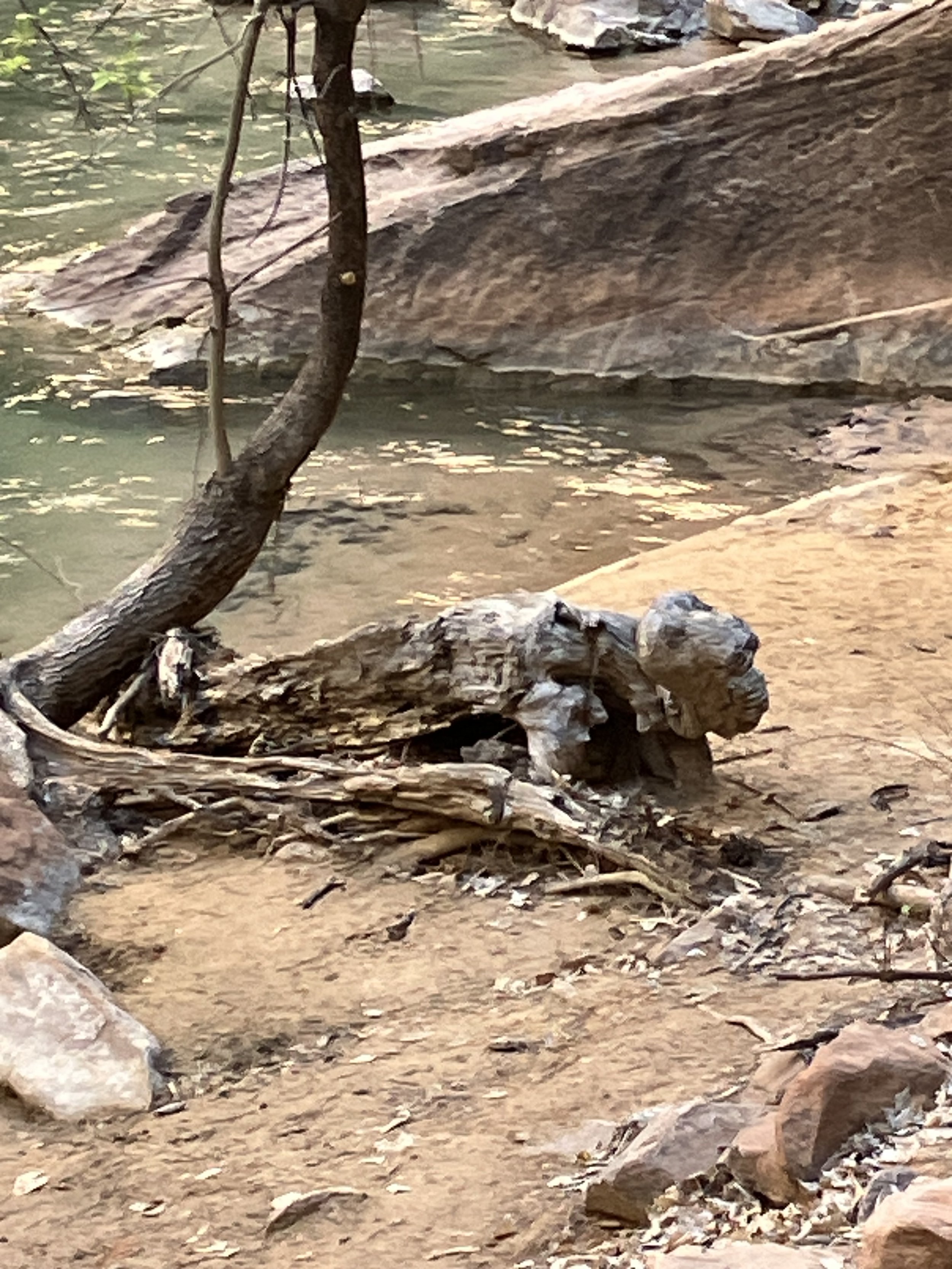
Dana Jacobs
Lawrence Bush
Dana Jacobs
Trevor Foulstone
OLD BULLS AND PEARLS
The screaming old bulls
standing arse to arse
in this football arena
demand another encore
Black bucket hats hiding their balding heads,
black T-shirts once new,
the logo of the band now stretches taut around their girth and memories
In the dark,
people sway
and shout the well-worn lyrics
Two seats over —
a soft cream light shimmers
where the woman sits
Wearing a blue and white striped woollen top,
beige ballerina shoes
and in each ear
a single cream drop pearl
catches the lustre of the day’s fading light —
like the worn red rose
inked on her wrist
As her fingers dance across the glass,
texting her children goodnight,
under her breath,
she whispers yesterday’s song.
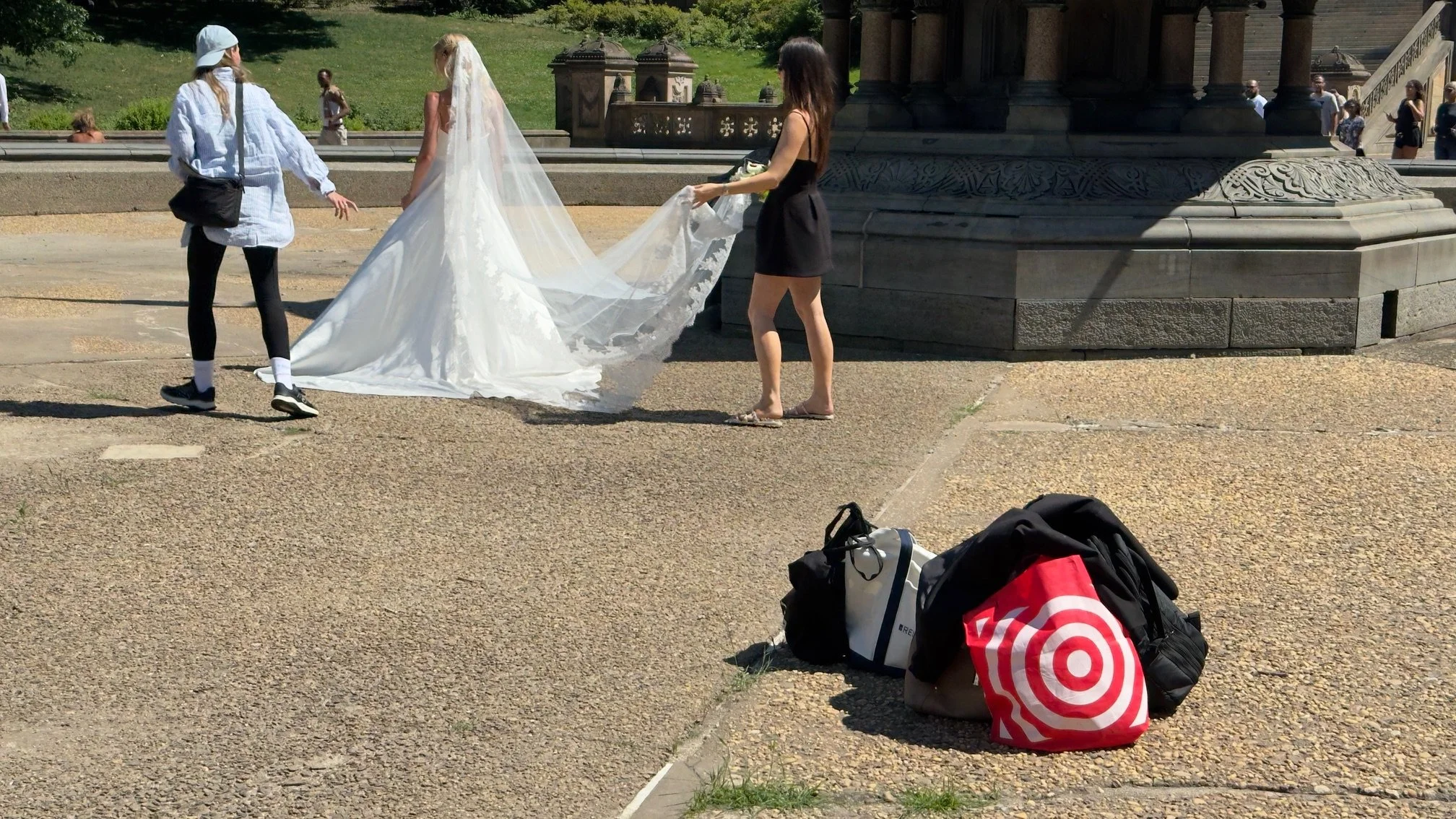
Helen Engelhardt
IF I FORGET THEE O JERUSALEM
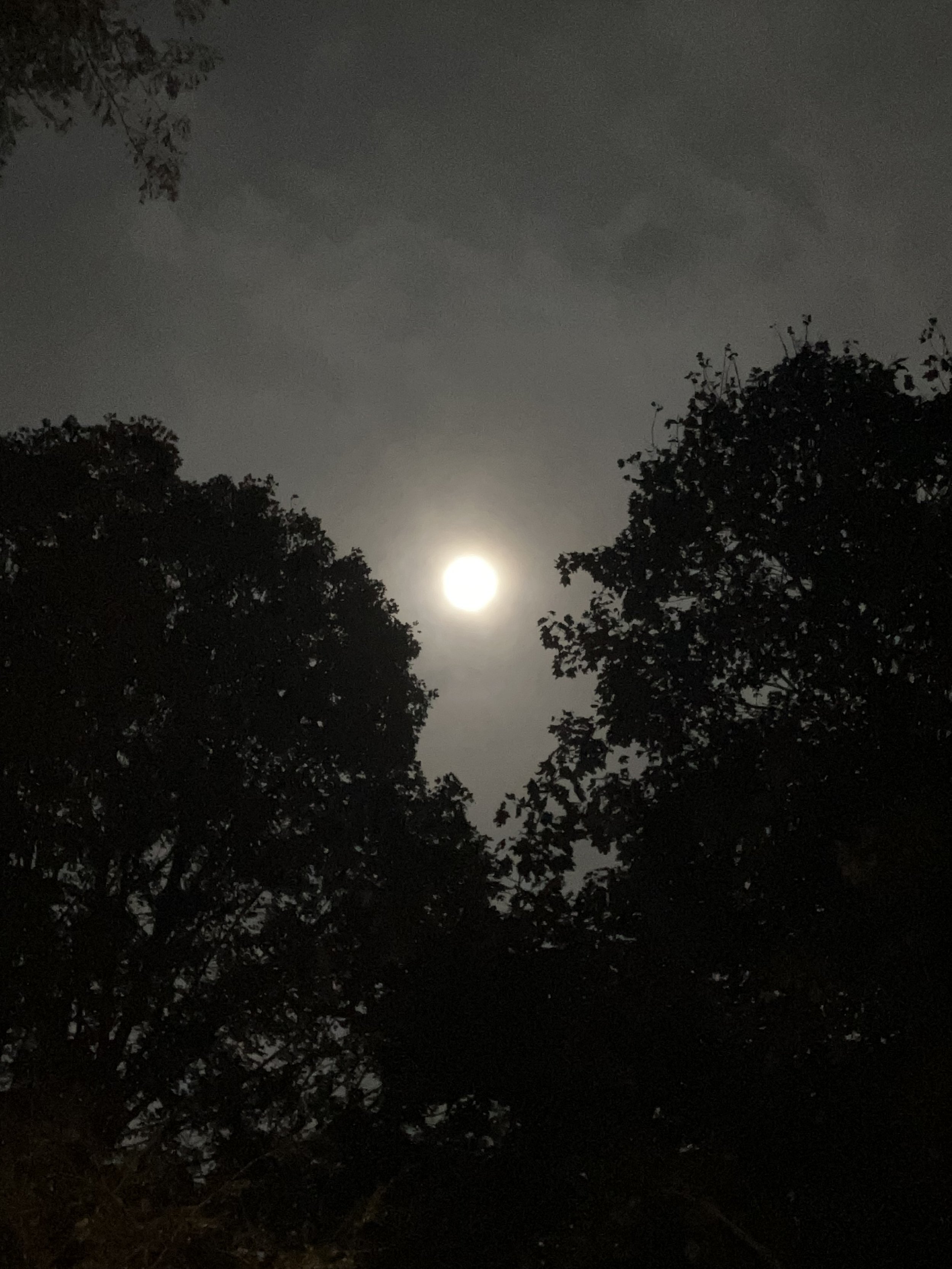
I forget Cheshvan full moon
Kotel murmurous with prayer women
squeezing into less than half the sacred
space petitions slipped into cracks
of grieving stones. I forget his yahrtzeit
walking down Zion to the base of the mountain
thinking all gates lead to the bridge back
to the city without walls
but young men are covering their faces
with black cloths and gathering torches.
They do not see me yet, or do not care
I have wandered into their world.
A man drives me back across
the valley back to the world I come from
the fifteenth year after the assassination.
If I forget thee O Jerusalem,
I forget the kindness of the Arab
in the Souk bringing me juice in the heat
of the afternoon, offering me a seat
in his tiny shop searching for sandals to fit
the soles of my feet.
Esther Cohen
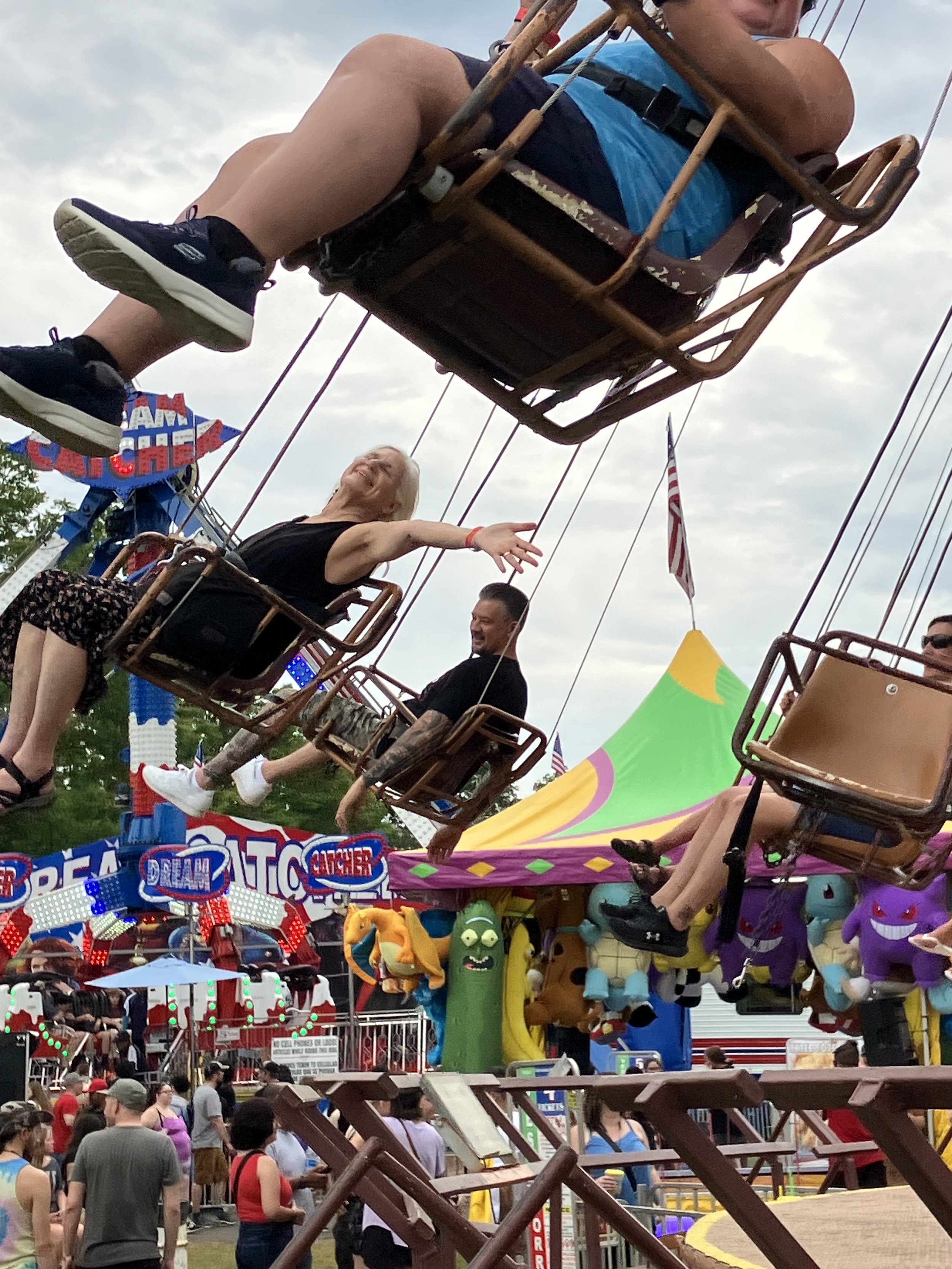
Dana Jacobs
Jessica de Koninck
JERUSALEM
Not the vestiges of Wall
pressed with paper prayers
Not the Temple, the dome, the rock
Not the line for women
the line for men
Not headscarves
Not orange groves
Not the Arab quarter
the Jewish quarter
the twelve stations of the Cross
Not the Cross
nor wood
nor nails
Not the monastery in the valley
across from the Knesset
Not Yad Vashem
nor the Six Million
Not Ishmael, not Isaac
Not olive trees, not land
But a quiet booth
at a diner
in Maplewood, New Jersey
a bowl of soup
a buttered roll
a cup of tea
Wendy Saul
CROSSING THE HUDSON
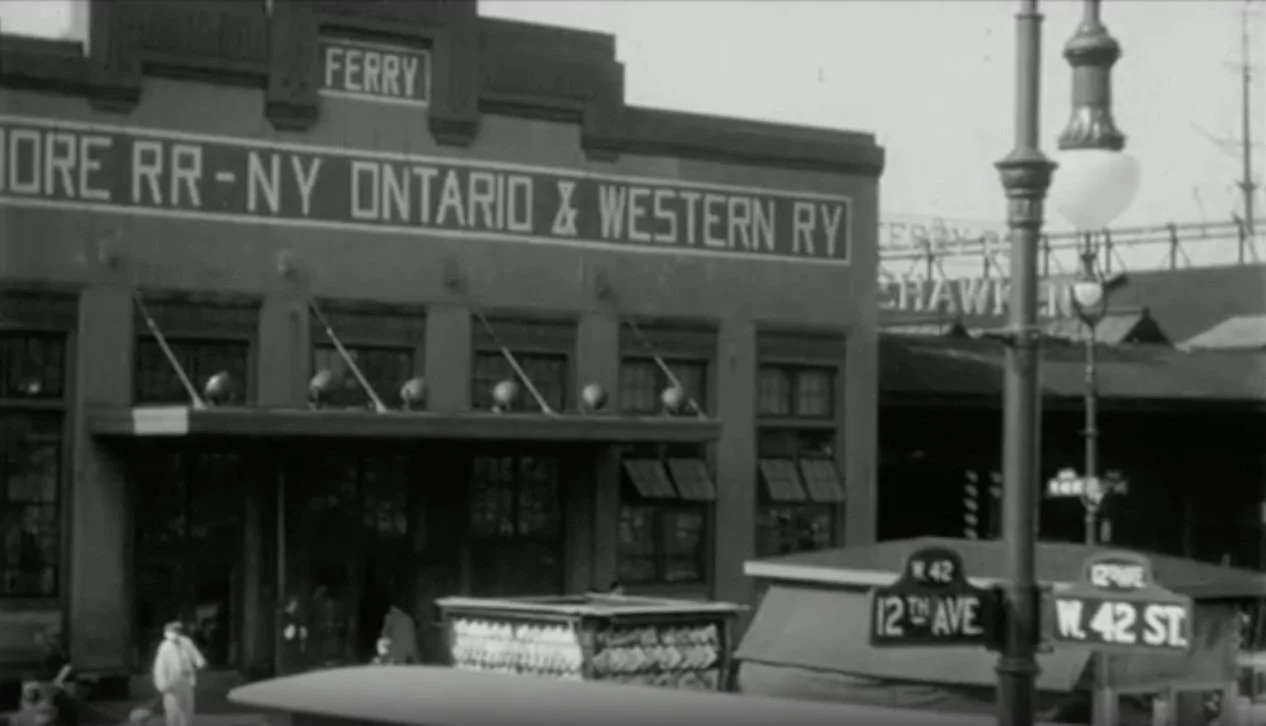
To get to my great-grandmother’s funeral in Hunter, NY in 1920, her Brooklyn children and their families must have taken a subway to Manhattan, crossed on the Weehawken, NJ Ferry, and picked up the West Shore Railroad that ran trains to Kingston or Catskill. From Kingston they boarded the Delaware and Ulster Railroad to Tannersville where they were met by Miriam and Zusel’s (Mary and Sussman’s) son, Uncle Joe.
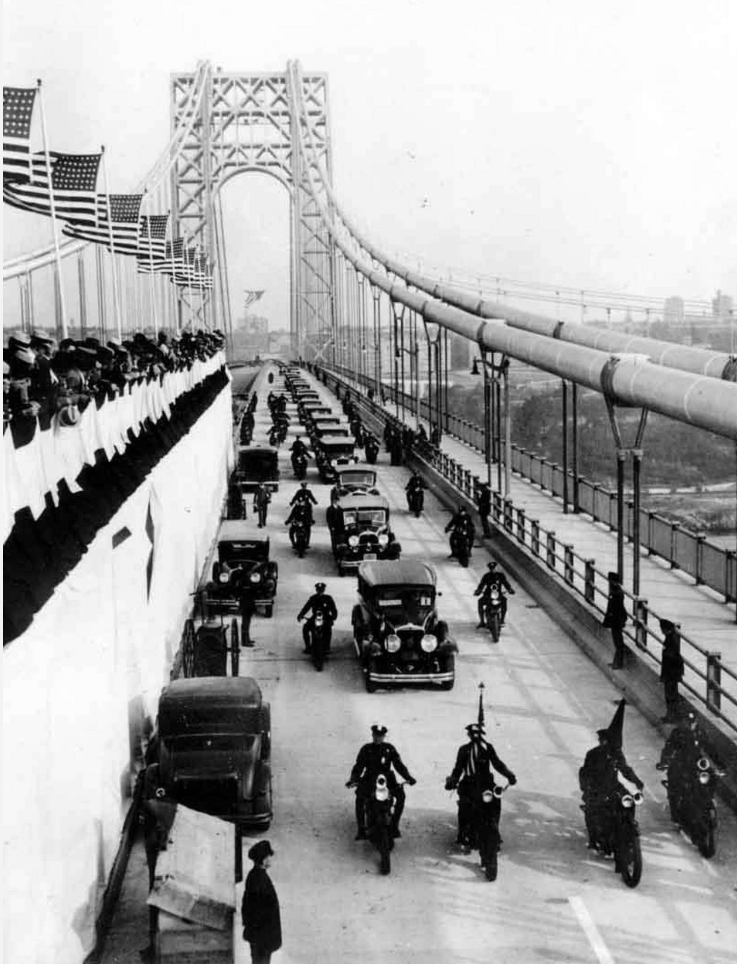
On Oct 25, 1931, my mother, then 14, rode in her father’s chauffeur-driven car across the George Washington Bridge the day it opened. Truly a spectacular high-wire view as they crossed from New Jersey to New York.
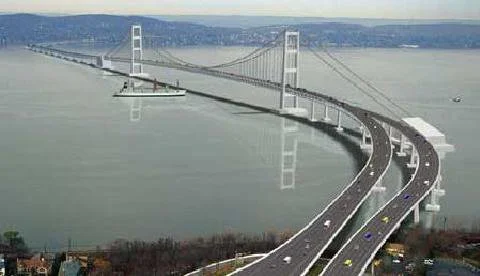
“The Bridge is open! “my father exclaimed in December, 1955 as we used the Tappan Zee for the first time. “So close to the water!,” we screamed.
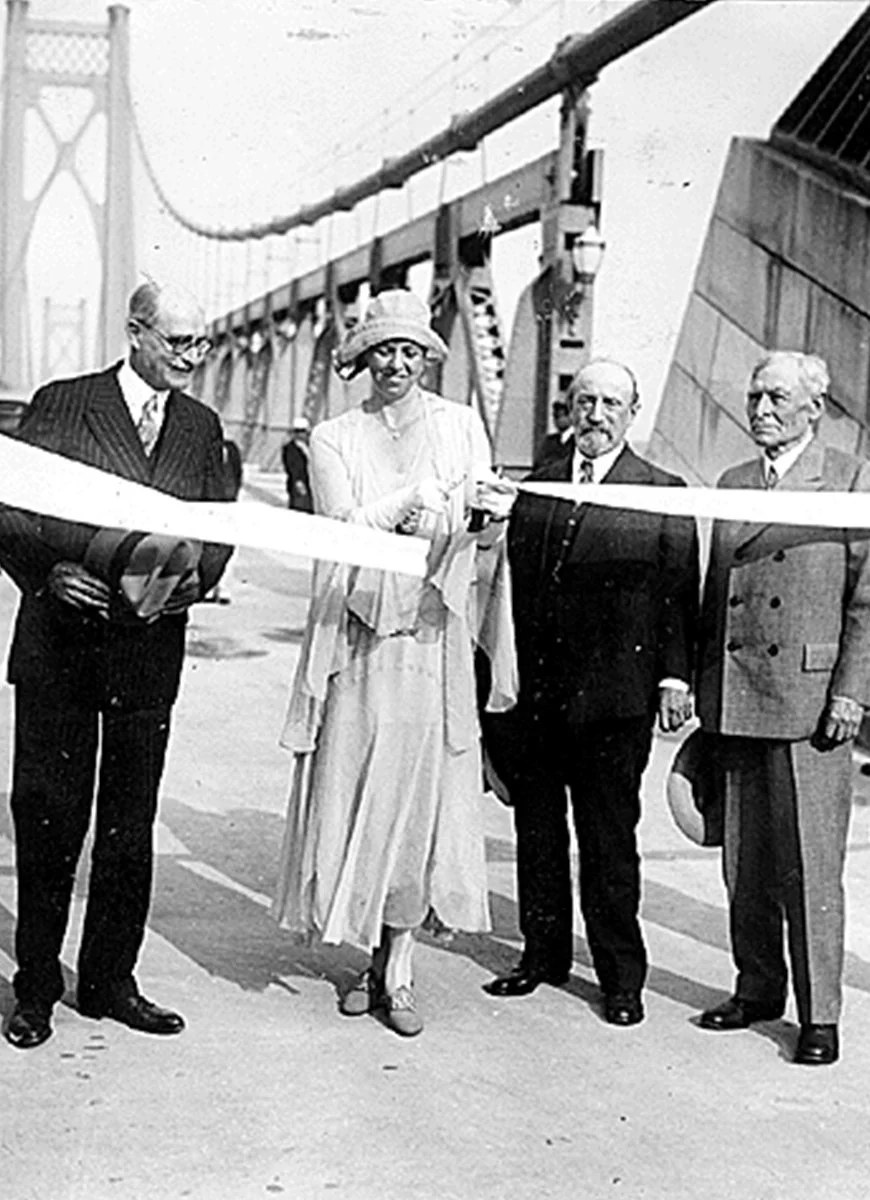
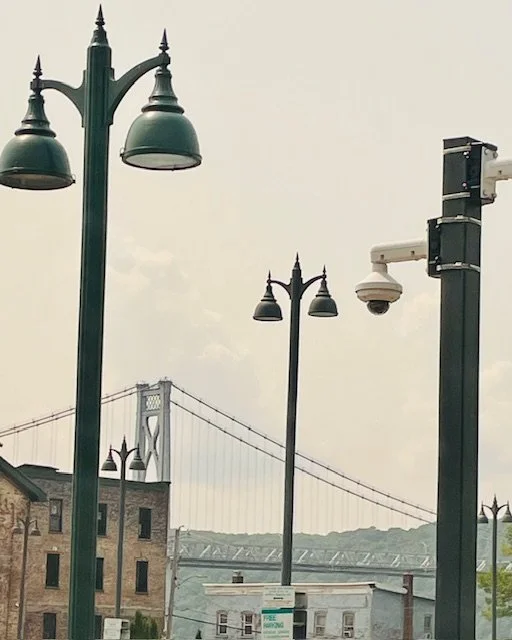
The world's longest elevated pedestrian bridge (1.28 miles) is a Hudson River conversion that transformed the historic 1889 Poughkeepsie-Highland Railroad Bridge into a scenic park. As I walk across the river, I think of Eleanor Roosevelt cutting the ribbon in 1930 at the bridge I see just to the north, the Mid-Hudson Bridge.
Today my “Easy-Pass” tracks my easy trips back and forth across the river, a river as beautiful as ever there was one.
Jessica de Koninck
1956 Nash Rambler Cross Country Station Wagon
Silvery gray steel, shiny white, candy apple green,
waxed and shining in the afternoon sun.
Fast cars, hot cars, hatchbacks, hard tops, roadsters.
Look at me. Look at me.
Fire engine red. Lipstick red. Ripe tomato red.
Arrest me red, we used to call it.
The automobile is the United States of America,
Or the United States of America is the automobile
Or it was. Or they were.
Beautiful once, too, like us,
coveted for flash, or horsepower
or even usefulness. Troubadours
penned songs about their colors
and their contours.
In the boxes filled with Paul’s notebooks
that come with me
each time I move
there are hundreds of drawings.
and designs for cars and motorcycles.
They smoked. They raced.
Tires squealed.
Songs about cars were America
and the United Auto Workers were America
and the Red Scare was America
My mother would sooner walk than buy a Ford,
Henry Ford, an antisemite
and a racist.
Aging with loose springs and worn suspensions
sturdy wagons hauled kids and groceries
and Dads, home from work.
Early in his career
Paul designed Auto Show exhibits.
Rotating platforms, lights, signs
that travelled from city to city. I would join
him at the New York show.
Until luck brought me a son and
I could avoid those hours peering under hoods, opening doors,
examining the latest sports cars, hybrids and compacts.
They would stay the whole day.
I can hardly distinguish one car from another
If I am lucky
I remember the color.
Paul could identify any motorcycle
by its sound.
Woodies were a staple
of the suburban vista.
They disappeared. It took me years to notice.
One of Paul’s drawings,
a motorcycle in the shape of a heart
with a smiling face,
hung on the wall for many years. It’s vanished.
I continue to wait
for the irrevocably lost
to reappear.
Our parents survived the Great Depression
and the War. We were the promise of the future.
We were Tomorrowland.
The automobile would take us there.
America
has fallen out of love.
Junk yards full of faded metal and clunkers scatter
the landscape—
sideview mirrors, front end panels,
headlight mounts and radiators available.
Mustang convertibles, once sexy,
now collected by old men
whose engines falter.
Gone the way
of rock and roll, a relic.
To the remote places where people abandon
what they once loved most,
go the wrecks, the broken, the irreparable, the future.
Nothing gold remains, said Frost.
Not even the work of our hands, say I.
Chrome and steel succumb
to the slow fire of rust.
Leather seats and vinyl dashboards,
like us, peel and turn to dust.
Lawrence Bush
Laura Anderson
Crossing the Gender Spectrum
About 20 years ago, with signed papers in hand and a smile on my face, I left the courthouse and embarked on this most incredible of journeys — living my life as a woman after living half a century as male.
It’s a long story. By second grade I was wracked by confusion, which later evolved into guilt. Why was I in the boys line when we lined up for lunch or for recess? At home, privately, secretly, I dressed in ways that I knew would be viewed as wrong. I knew enough to tell no one. Fortunately, I escaped the suicidal fate so many other transgender youth and adults succumbed to, but I thought about it often, especially when I reached puberty and my body changed in all the wrong ways.
A solution? I thought if I found the right woman she might cure me. I did find her and we were so in love. But despite our deep love and camaraderie and our wonderful 3 children, I was stalked, continually, by the crushing reality — I was not who I pretended to be. I needed to keep the secret until my death. I could not let anyone ever know! Finally, in my mid-fifties, exhausted and unable to ignore and deny the truth any longer, I came to terms with the fact that my true gender, my identity, was female.
My transition began by admitting and articulating the fact that my body and “self” were misaligned. Ignoring that truth was futile. The first public step? How do I step into a world where every minute detail is noticed? In a hotel a day’s drive from my home, well past midnight, I made my way to the ice machine wearing a housecoat, mascara and lipstick. Down an empty half-lit hallway (such adventure) I tip-toed. It continued with such frightening forays into strange and new places like restrooms.
A letter from my therapist allowed me to begin hormone treatment. What a giant step to take that first pill! A year of the 'real-life test' — living and presenting as a woman in all aspects of my life — came next. Each step I moved further — a letter to my surgeon and then a road trip. My wonderful mother, then in her 80’s. accompanied me in a second birth as I sought to align my body with my mind.
So, where do I find myself two decades later after my transition, “crossing?” Today I am legally, emotionally, and physically a woman (at least as far as medical science can take me). The young girl and woman within me is finally out ,and each day I feel the wonder of being my female self. I am truly me! New opportunities and challenges arise. My children and grandchildren know and love me for who I am. Still, I continue to wish that I hadn’t hurt my wonderful wife as I obviously did. Moreover, today’s hostility toward the transgender community has created a need for new secrets. The people in my senior housing community know me as Laura and yet Charlie was a part of how I got to be the woman I am today.
The consequences of being read or outed can be dire. Trans people meet with ridicule and suspicion. I have been laughed at and called names — disparaged as if I were in middle school. The world can be a dangerous place, especially for trans women — especially now in 2026. If you pass and are able to blend in and manage to keep those new secrets unrevealed, your life is safer and easier. In our society, just knowing that I may have (or had) a penis changes everything. I go from being an 'us' to suddenly becoming a 'them.'
For most of my life I considered my gender turmoil a source of pain that plagued me relentlessly. I wished I could have been born a normal female. I desperately wanted to experience the things that cisgender women experience — not merely being on the outside looking in. But that sense of wishing eventually passes. Transitioning has, in its own way, been an amazing and wonderful journey. As a young person I could never have imagined my good luck in ending up where I am today. I could never have envisioned such an outcome, such good fortune.
And best of all, the journey of transition continues!
Jane Tainow Feder
CROSSING
My kid sister died in December. Spirit collapses; unbearable silence thunders; where’s my leg? my heart? I come undone. Thinly masked hysteria follows for months. All the surgeons agree; so much pain! Give her a new shoulder, a knee, a hip—now! Then, felled by prolonged and ultra-breathless asthma, I skid to a stop. To breathe. To sleep. Time to wonder where I had gone.
She knew; my sister knew, The sabbath eve, her last sabbath eve just prior to relenting to delirium, she whispered to me, “You know, love continues into death.”
She was cremated; the kind of end she chose for her many beloved cats and dogs.
My children and I took our time to part with all but a tiny bit of their ashes. When we did, we knew she’d love the shore just as she and her pups loved to swim.
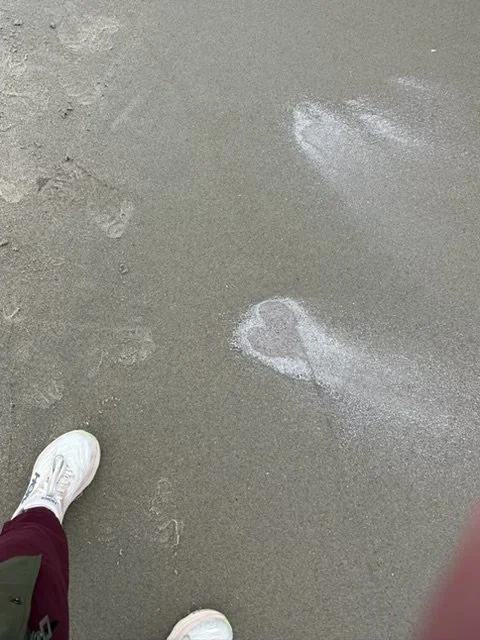
We took her ashes and those of her adored pets and mindful of the wind and the surf scattered my precious sister’s and her pets’ ashes. Before we even finished, there arose in the sand
Gail Kinn

Dana Jacobs
Joyce Greenberg Lott
CROSSING OVER
It’s like swimming under water with your eyes closed
so the salt water won’t sting them bloodshot.
All you know is your own body separating the sea.
Someone gives you snorkeling gear,
tells you to wipe your spit across the lens
and push the mask low on your nose.
You fit the tip of the snorkel over your gums,
like the wax teeth you ate as a kid,
and when you go under this time you can see
purple sea fans and queen angelfish,
blue parrotfish and grooved brain coral,
red grouper and corky sea fingers.
And all the time you’re doing the dead man’s float,
you know that your body is only a visitor.
Still, you can breathe and breathe and breathe.
Lawrence Bush
Lory Frankel
CROSS PURPOSES
Scene 1: A living room
HE: You just don't understand.
SHE: I think I do.
HE: No, no, you don't understand.
SHE: Right. I don't understand. All too well. (She storms out)
Scene 2: A bar
HE: My wife understands me.
BARTENDER (stops wiping bar, pauses): You mean, she doesn't understand you.
HE: All too well.
Scene 3: A café
SHE (to her FRIEND): I don't understand him at all.
Scene 4: A therapist's office
HE: But she doesn't understand, not really. I mean, I know she tries, but she just can't know. It's not her fault. It's not as if I blame her.
HIS THERAPIST: But you do. It obviously makes you angry that she can't understand.
HE: No, no, I really don't blame her. It's just, I don't want her thinking she understands when she doesn't. It strikes me as dishonest.
HIS THERAPIST: So you'd rather be right than have a relationship.
Scene 5: A therapist's office
SHE: He just drives me nuts. I'm never allowed to understand him.
HER THERAPIST: Do you think you do?
SHE: Well, yes, I think so. That is, at least to some extent. I mean, how much can we really understand each other? But I don't count that, I just mean, you know, the kind of surface stuff. There is stuff we can understand, isn't there?
HER THERAPIST: It's really important to you to think you understand, isn't it? Do you feel you lose control if you admit you don't?
Scene 6: A living room
HE: I'm sorry I said that, about your not understanding. That wasn't fair.
SHE: No, no, you're right, I don't really understand.
HE (catches her hands in his): Hey, no, you're one of the most understanding people I know.
SHE: No, no, it's all part of a power trip, a control trip.
HE: Are you kidding? You? Who've you been talking to?
SHE (Pulls her hands from his): What do you mean? Why do you say that?
HE: Nothing, no reason, I just—have you been talking to someone? I'm just curious.
SHE: You have to be right, no matter what, don't you?
HE: Why do you have to make a mystery out of something perfectly simple?
(They exit to opposite ends)
Esther Cohen
CROSSING: A MURDER MYSTERY
Susan Schwartz, 73, was walking across 79th Street towards Broadway when shE noticed, almost as though it had been there forever, an actual body. Dead. A man oF indeterminate age, wearing what looked like an imitation Burberry raincoat. An addict of Scandinavian and British TV mysteries, especially those with Lesley Manville, she decided she’d figure this one out. So she went into Liquor Liquor, an overpriced wine shop on the corner, and asked Igor the manager Who Did It. Igor was a smart man. He said the dead man was William from apartment 36 in the building above the store. His girlfriend Rose, sad Igor. They were a contentious couple. She wanted to make it seem as though he just had a heart attack. I’m sure she poisoned him. So Susan went into the building, rang the bell of apartment 36, and confronted Rose. “Did you kill William?” she asked the frazzled woman who came to the door. “I did,” said Rose. And that was that.